ArmoLipid Plus vs Statins: What's the Difference?
ArmoLipid Plus and statins are both discussed in conversations about cholesterol, but they are not the same thing. Here we explain the key differences, how their ingredients work and why a food supplement should not be considered a direct substitute for prescribed medication.
What is ArmoLipid Plus?
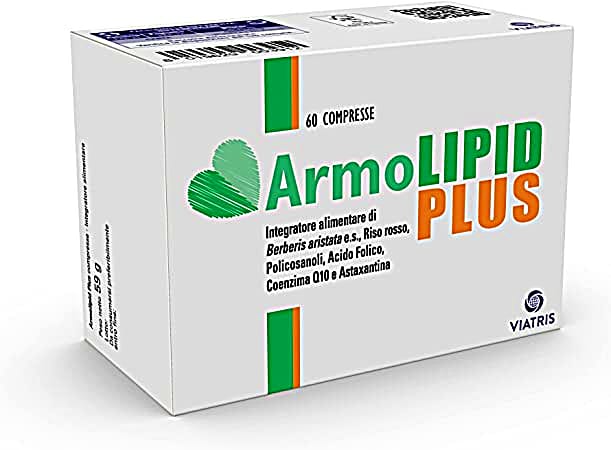
ArmoLipid Plus is a multi-ingredient food supplement developed for people interested in supporting a cholesterol-conscious lifestyle.
Rather than containing a single ingredient, ArmoLipid Plus combines several compounds that have attracted interest in the field of lipid and metabolic health.
Depending on the specific formulation and market, these may include ingredients associated with red yeast rice, berberine and Coenzyme Q10 (CoQ10), among others.
Because formulations can differ between countries and may change over time, the current product label should always be checked before use.
What are statins?
Statins are prescription medicines widely used to reduce LDL cholesterol and cardiovascular risk.
Examples include atorvastatin, simvastatin, rosuvastatin and pravastatin.
They work primarily by inhibiting an enzyme called HMG-CoA reductase, which plays an important role in cholesterol production in the liver.
Reducing cholesterol production encourages the liver to remove more LDL cholesterol from the bloodstream.
Statins have been extensively studied in large clinical trials and are an established treatment for people whose cardiovascular risk makes cholesterol-lowering medication appropriate.
Is ArmoLipid Plus a statin?
No. ArmoLipid Plus is a food supplement, not a statin medication.
This distinction is important.
Statins are medicines prescribed or recommended according to an individual's cholesterol levels and overall cardiovascular risk. ArmoLipid Plus is a multi-ingredient supplement.
However, the comparison becomes more interesting when looking at one ingredient historically associated with some red yeast rice preparations: monacolin K.
Why is red yeast rice often compared with statins?
Red yeast rice is produced by fermenting rice with certain species of Monascus yeast.
Some red yeast rice preparations can contain substances known as monacolins.
The best-known of these is monacolin K.
Monacolin K is chemically identical to lovastatin, a statin drug.
This is an important fact because it demonstrates why describing red yeast rice simply as a “natural” ingredient can sometimes be misleading.
A naturally derived substance can still have significant biological activity.
Does that mean red yeast rice is the same as taking a statin?
Not exactly.
Although monacolin K and lovastatin are chemically the same molecule, a food supplement containing red yeast rice and a prescribed statin medication are not automatically interchangeable.
Prescription medicines have defined doses, pharmaceutical quality standards and established treatment protocols.
The composition of food supplements can differ according to formulation, manufacturer and applicable regulations.
In addition, modern regulations can significantly affect the amount of monacolins permitted in red yeast rice products in different markets.
For this reason, consumers should always check the current formulation rather than assuming that every red yeast rice supplement is equivalent.
ArmoLipid Plus vs statins: the main differences
The simplest way to understand the comparison is to look at their purpose and regulatory status.
1. ArmoLipid Plus is a food supplement
ArmoLipid Plus belongs to the food supplement category and contains a combination of ingredients.
Statins are medicines specifically used in the management of cholesterol and cardiovascular risk.
2. Statins have extensive clinical evidence
Statins are among the most extensively researched cholesterol-lowering medicines.
Large clinical trials have demonstrated that appropriate statin treatment can reduce cardiovascular events in people for whom treatment is indicated.
The evidence available for individual supplement ingredients is not equivalent in scale or strength to the evidence supporting statin therapy.
3. ArmoLipid Plus uses a multi-ingredient approach
ArmoLipid Plus combines different ingredients rather than relying on a conventional pharmaceutical statin as its sole active component.
Depending on the formulation, these ingredients may have different roles and mechanisms.
4. They should not be considered interchangeable
A person who has been prescribed a statin should not discontinue it and replace it with ArmoLipid Plus without discussing the decision with an appropriate healthcare professional.
The two products occupy different regulatory and clinical categories.
What role does berberine play?
Another ingredient associated with ArmoLipid Plus formulations is berberine.
Berberine is a naturally occurring compound found in several plants and has been investigated for its effects on lipid and glucose metabolism.
Its mechanisms differ from those of conventional statins.
Research has investigated potential effects on LDL cholesterol, triglycerides and other metabolic markers, although the evidence should not be interpreted as showing that berberine is equivalent to established cholesterol-lowering medication.
Berberine is also biologically active and can interact with medicines, which is another reason why “natural” should not be interpreted as synonymous with risk-free.
Why is CoQ10 included in some cholesterol supplements?
Coenzyme Q10 (CoQ10) has a different role.
CoQ10 is naturally present in the human body and participates in cellular energy production.
It is frequently discussed in relation to statins because cholesterol synthesis and CoQ10 synthesis share parts of the same biochemical pathway.
Statin therapy can reduce circulating CoQ10 concentrations, which has led researchers to investigate whether CoQ10 supplementation could have a role in people experiencing certain statin-associated symptoms.
Research in this area has produced mixed results, and CoQ10 should not itself be regarded as a substitute for cholesterol-lowering treatment.
Is ArmoLipid Plus a natural alternative to statins?
The phrase “natural alternative to statins” should be used cautiously.
It can imply that a supplement can simply replace prescribed statin therapy, which is not an appropriate conclusion.
A more accurate description is that ArmoLipid Plus is a food supplement containing ingredients of interest in the context of cholesterol and metabolic health.
Whether a supplement is appropriate depends on the individual situation.
For someone with substantially elevated LDL cholesterol, familial hypercholesterolaemia, previous cardiovascular disease or otherwise high cardiovascular risk, appropriate medical treatment can be particularly important.
Can you take ArmoLipid Plus with statins?
This should not be decided simply by assuming that a supplement is harmless because it is available without prescription.
Red yeast rice-derived compounds and other biologically active ingredients may interact with medicines or create overlapping effects.
People taking a statin or another cholesterol-lowering medication should therefore consult a doctor or pharmacist before adding ArmoLipid Plus or another cholesterol supplement.
The same principle applies to people taking multiple medications or living with relevant medical conditions.
What about statin side effects?
Like all medicines, statins can cause side effects, although many people take them without significant problems.
Muscle-related symptoms are among the effects most commonly discussed by patients, while clinically important liver or muscle complications are considerably less common.
Experiencing a possible side effect does not necessarily mean that cholesterol treatment must be abandoned.
Different statins, doses and treatment strategies are available, so suspected adverse effects should be discussed with a healthcare professional rather than managed by stopping prescribed medication independently.
Are natural cholesterol supplements safer than statins?
Not necessarily.
The assumption that “natural” automatically means “safer” is one of the most common misconceptions surrounding supplements.
The biological effects of a substance do not depend on whether it originated in a plant or a pharmaceutical laboratory.
Red yeast rice provides an excellent example: monacolin K is a naturally occurring molecule but is chemically identical to a pharmaceutical statin.
Other supplement ingredients can also produce adverse effects or interact with medication.
Safety therefore depends on the specific ingredient, dose, formulation and individual using it.
Who should pay particular attention?
Professional advice is particularly important for people who:
- already take statins or other cholesterol-lowering medicines;
- take several prescription medicines;
- have cardiovascular disease;
- have very high LDL cholesterol;
- have liver or kidney conditions;
- have experienced adverse reactions to cholesterol treatments;
- are pregnant or breastfeeding;
- have other significant medical conditions.
The product label should also be checked for specific contraindications and warnings.
Diet and lifestyle still matter
The discussion should not be reduced to choosing between a supplement and a statin.
Diet and lifestyle remain important components of cardiovascular health regardless of whether someone uses supplements or prescription medication.
A cholesterol-conscious lifestyle can include:
- reducing excessive saturated fat intake;
- eating more soluble fibre;
- including vegetables, fruit, legumes and whole grains;
- choosing appropriate sources of unsaturated fats;
- exercising regularly;
- maintaining an appropriate body weight;
- avoiding smoking.
You can read our complete guide to lowering cholesterol naturally through diet and lifestyle for a broader overview.
How do you know whether your cholesterol strategy is working?
Cholesterol cannot reliably be assessed according to how someone feels.
High LDL cholesterol usually produces no obvious symptoms.
A blood test is therefore necessary to determine cholesterol levels and monitor changes.
It is also important to look beyond a single total cholesterol number.
LDL cholesterol, HDL cholesterol, triglycerides and individual cardiovascular risk factors can all contribute to deciding what level of intervention is appropriate.
So who might consider ArmoLipid Plus?
ArmoLipid Plus may be of interest to adults looking at nutritional approaches to complement a cholesterol-conscious diet and healthy lifestyle, provided the product is appropriate for their individual circumstances.
However, its suitability cannot be determined simply from a cholesterol number or an online article.
People with diagnosed high cholesterol, those already taking medication or those at elevated cardiovascular risk should discuss supplements with an appropriate healthcare professional.
Where can you buy ArmoLipid Plus?
ArmoLipid Plus is available through different retailers and online channels, although availability and formulation can vary by country.
Before purchasing, it is useful to check the exact version of the product, the current ingredient list, directions for use and relevant warnings.
Optimal Naturals provides product information for customers interested in learning more about the currently available ArmoLipid Plus formulation.
ArmoLipid Plus vs statins: in summary
ArmoLipid Plus and statins should not be treated as two interchangeable versions of the same treatment.
Statins are established cholesterol-lowering medicines supported by extensive clinical evidence and used according to individual cardiovascular risk.
ArmoLipid Plus is a multi-ingredient food supplement containing compounds of interest in cholesterol and metabolic health.
The presence of ingredients associated with red yeast rice makes the comparison particularly interesting because monacolin K is chemically identical to lovastatin. At the same time, this is precisely why natural cholesterol products should not be assumed to be risk-free.
Diet, physical activity and other lifestyle measures remain important in either case.
Most importantly, anyone already prescribed cholesterol-lowering medication should not replace or combine treatments independently without appropriate professional advice.
Discover ArmoLipid Plus
Learn more about ArmoLipid Plus, its current formulation, ingredients and product information.
View ArmoLipid PlusLast updated: 12 September 2026